
By Gunw L — technology and leadership writer covering Silicon Valley executive transitions, Apple product strategy, and engineering culture since 2018.
After nearly 15 years of Tim Cook at the helm, Apple is handing the world's most valuable company to an engineer who almost never appears on magazine covers. On April 20, 2026, Apple announced that John Ternus, its senior vice president of hardware engineering, will succeed Tim Cook as CEO effective September 1, 2026. If you're searching "who is John Ternus," this guide walks through his background, career at Apple, the products he quietly shaped, and the strategic bets he'll face as the company's next chief executive.
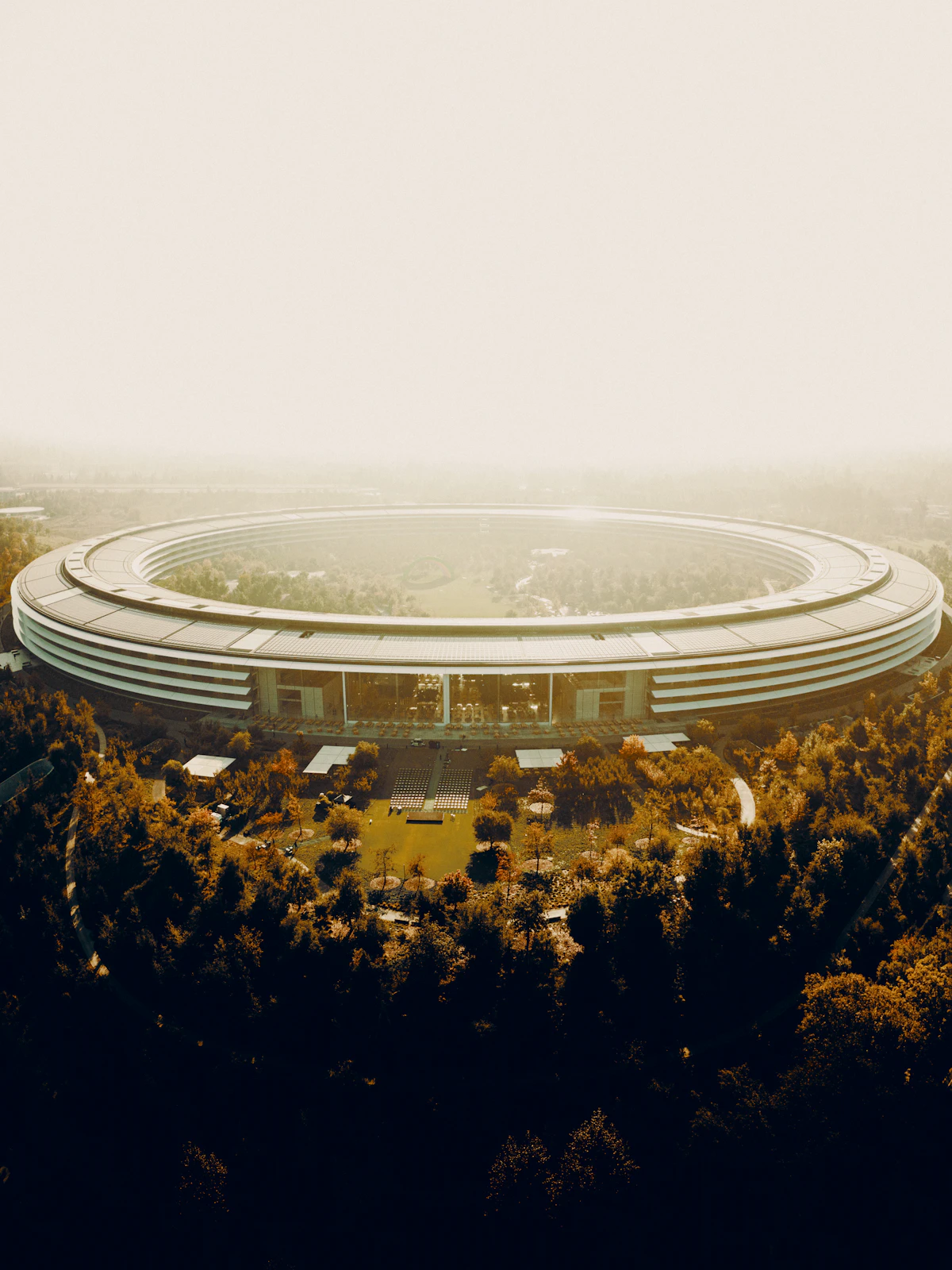
Apple Park, Cupertino. Photo: Unsplash (royalty-free).
Key Takeaways
- John Ternus will become Apple's next CEO on September 1, 2026.
- He is Apple's current senior vice president of hardware engineering, a role he has held since 2021.
- Ternus joined Apple in 2001 and has spent more than two decades inside the company.
- He was born in May 1975 and holds an engineering degree from the University of Pennsylvania.
- Tim Cook will transition to executive chairman, remaining on the Apple board.
Table of Contents
- John Ternus: Quick Biography
- Apple Career: From Engineer to CEO-in-Waiting
- The Apple Products Ternus Helped Build
- Leadership Style and Public Presence
- Challenges Facing Apple's Next CEO
- Why Apple Chose Ternus Over Other Executives
- John Ternus FAQ
John Ternus: Quick Biography
John Ternus is an American engineer and business executive born in May 1975. He earned his engineering degree from the University of Pennsylvania and has spent the majority of his career inside Apple. Unlike many high-profile tech executives, Ternus rarely grants personal-interest interviews, preferring to let the products he oversees speak for him.
Inside Apple he is widely respected as a soft-spoken, technically deep operator who can manage thousands of engineers across silicon, mechanical, thermal, and manufacturing teams simultaneously. Colleagues describe him as collaborative, detail-obsessed, and notably calm in a company famous for intense product cycles.
Ternus at a Glance
- Full name: John Ternus
- Born: May 1975 (age 50 in 2026)
- Education: University of Pennsylvania (engineering)
- Current role: Senior Vice President of Hardware Engineering, Apple
- Years at Apple: 25+ (joined 2001)
- Next role: Chief Executive Officer, Apple (effective September 1, 2026)
Apple Career: From Engineer to CEO-in-Waiting
Ternus joined Apple in 2001 as a product-design engineer during a transformational era for the company. Over the next two decades he moved steadily up the engineering ladder, leading teams responsible for iPad, iPhone mechanical design, and eventually the full hardware-engineering organization. He was elevated to senior vice president in 2021, succeeding Dan Riccio when Riccio shifted to special projects.
As SVP, Ternus became one of the small group of executives who speak on stage at Apple's marquee product keynotes. His appearances at the company's spring and fall events, especially for iPad and Mac launches, introduced him to the broader public as a confident on-camera presenter who can translate deep engineering into accessible language.
"Engineering-first is not a slogan at Apple — it's the org chart. Putting Ternus in the CEO seat says the product still drives the company."
The Apple Products Ternus Helped Build
It is difficult to list a single Apple product from the last twenty years that Ternus did not touch in some capacity. His fingerprints are especially heavy on the iPad lineup, recent iPhone generations, and Apple's transition to custom silicon across the Mac family.
- iPad Pro — mechanical and thermal architecture across multiple generations.
- iPhone (modern generations) — hardware engineering leadership during the camera and battery evolution.
- Apple silicon Macs — the hardware integration that paired custom chips with redesigned notebooks and desktops.
- Apple Vision Pro — contributing hardware engineering work for the company's spatial-computing device.
The throughline of this catalog is integration: tightly coupling Apple's chips, operating systems, sensors, and industrial design into devices that feel like single objects rather than assemblies. Ternus's promotion signals that Apple intends to keep doubling down on that integration playbook, even as software and AI take a larger share of industry attention.
Leadership Style and Public Presence
Where Tim Cook projected the steady, supply-chain-perfect operator and Steve Jobs projected the showman, Ternus projects the engineer. He tends to appear on stage in dark sweaters and jeans, walks viewers through diagrams rather than slogans, and frames new products in terms of technical trade-offs rather than lifestyle promises.
That understated style is unusual for a Silicon Valley CEO in 2026, when peer companies often feature charismatic founders on every podcast and conference stage. Investors and employees will be watching how Ternus adapts that low-key persona to the more public role CEOs increasingly play on policy, AI safety, and international trade.
Three Things Employees Mention Most
- Technical depth: he asks engineering questions at a level most executives cannot.
- Calm decisions: he is known for level-headed resolution of multi-team disputes.
- Product obsession: he reportedly reviews late-stage prototypes personally before shipping.
Challenges Facing Apple's Next CEO
Taking over Apple in late 2026 means inheriting an enviable business — and a set of strategic challenges that will define the next decade. AI, regulatory pressure, and the post-smartphone device roadmap sit at the top of the list.
- Artificial intelligence: Apple's on-device and cloud AI strategy is still being defined against aggressive rivals. Ternus will need to articulate a product vision that positions Apple as the AI platform consumers trust with their most personal data.
- Regulatory pressure: U.S., EU, and Asian antitrust and App Store rules continue to reshape Apple's services business. The next CEO must balance openness with security in ways that satisfy regulators without eroding margins.
- Post-smartphone devices: Vision Pro, wearables, and potential new categories (smart home, automotive, health) are the growth frontier. Ternus's hardware background is directly relevant here.
- Global supply chain: Shifts in manufacturing from China to India, Vietnam, and beyond require deep operational execution — an area where Tim Cook set a very high bar.
- Culture continuity: Apple's product culture is its crown jewel. Ternus is tasked with preserving it through a generational leadership handoff.
"The question isn't whether Apple will ship great products — it's whether the next CEO can redefine what a great product even is in an AI era."
Why Apple Chose Ternus Over Other Executives
The CEO succession short-list inside Apple reportedly included several senior leaders, and analysts had long speculated about names such as Craig Federighi, Jeff Williams, and Deirdre O'Brien. Choosing Ternus reflects three signals: Apple is betting on hardware-software integration, it values deep internal tenure, and it wants operational continuity over showmanship.
According to Apple Newsroom, the board made the decision as part of a multi-year succession planning process, with Tim Cook moving to the executive chairman role to preserve institutional knowledge. News organizations including Reuters, the BBC, and CBC have echoed that framing in their coverage.
[INTERNAL LINK: anchor "Apple leadership timeline" → topic: Apple's CEO history from Jobs to Cook to Ternus]
[INTERNAL LINK: anchor "Apple silicon explained" → topic: how Apple's custom chips changed the Mac]
John Ternus FAQ
Who is John Ternus?
John Ternus is an American engineer and Apple executive who has served as senior vice president of hardware engineering since 2021. He joined Apple in 2001 and has led hardware engineering across the iPad, iPhone, and Mac product lines. Apple announced on April 20, 2026 that he will become the company's next chief executive officer on September 1, 2026.
When does John Ternus become Apple's CEO?
John Ternus officially becomes Apple's CEO on September 1, 2026, succeeding Tim Cook, who will transition to the role of executive chairman. The timeline gives Apple and its investors a multi-month window to prepare for the handover, with Cook remaining closely involved on the board during the transition period.
What is John Ternus's background?
Ternus was born in May 1975 and holds an engineering degree from the University of Pennsylvania. He built his career entirely inside Apple's hardware-engineering organization, rising from product-design engineer to senior vice president over more than two decades. He is best known for his leadership on iPad and the mechanical engineering behind modern iPhones and Apple silicon Macs.
How is John Ternus different from Tim Cook?
Tim Cook rose through operations and supply-chain management, while Ternus is a career hardware engineer. That shift signals Apple's continued emphasis on tight hardware-software integration and on product-driven decision making. Stylistically, Ternus is quieter and more technical on stage, favoring engineering explanations over broad cultural narratives.
Bottom Line
John Ternus represents Apple's next chapter: an engineer-CEO taking over the world's most valuable company just as AI, regulation, and new device categories force a strategic reset. His long internal tenure, deep product fluency, and calm decision-making style suggest continuity over reinvention — but the opportunities and threats he inherits in 2026 are unlike anything Apple has navigated before.
Call to action: Bookmark this profile, share it with someone following Silicon Valley leadership, and check back as we update it with Ternus's first keynote, strategy announcements, and key hires after September 1, 2026.
Sources & further reading: Apple Newsroom (apple.com/newsroom), Reuters, BBC, CBC, and Wikipedia public knowledge panel. Biographical details reflect public reporting as of April 21, 2026, and may be updated as new information becomes available.